
Facilitating Intersectoral Coordination through Design Methodologies
UNIT worked with the Inter-American Development Bank (IDB) to strengthen intersectoral coordination in the Cultural and Creative Industries (CCI) of Mexico’s South-Southeast region, incorporating design methodologies and collective intelligence to produce a sustainable platform for generating public value.
Intersectoral Coordination as a Design Problem
For more than a decade, the IDB has promoted Executive Roundtables as instruments for public-private coordination to address bottlenecks in strategic sectors. These roundtables periodically bring together representatives from the public sector, private sector, and academia to identify productive barriers, agree on priorities, and define joint actions.
However, convening actors alone does not guarantee sustained results. In complex contexts, these spaces face recurring challenges: broad agendas without clear prioritization, agreements that do not always translate into operational roadmaps, and difficulties in following up on intersectoral commitments over time.
In Mexico’s South-Southeast —a region central to national productive development— this challenge was particularly evident in the Cultural and Creative Industries and their link to tourism.
The CCI encompasses activities such as crafts, audiovisual production, performing arts, design, music, and cultural tourism. Far from a homogeneous sector, they constitute a complex productive ecosystem where multiple actors —public, private, and community-based— interact through value chains that cut across culture, economic development, and tourism promotion.
The ecosystem held significant economic potential, yet also suffered from institutional fragmentation, informality, and weak coordination between culture, economic development, and tourism promotion. The challenge was not the absence of sectoral capabilities or actors, but the way in which they interacted. Although initiatives, institutions, and talent existed across the territory, there was no collaboration design capable of aligning dispersed efforts into shared, sustainable strategic agendas.
Transforming Coordination into Strategic Action
In 2022, the IDB engaged UNIT to support the installation and operation of Executive Roundtables in Yucatán, Campeche, Oaxaca, and Chiapas. The mandate was not simply to facilitate encounters, but to structure the operational capacity of these spaces to translate shared diagnoses into strategic decisions and actionable roadmaps.
To achieve this, UNIT built on the existing instrument, incorporating a collaborative innovation methodology grounded in service design and collective intelligence to organize processes of territorial research, strategic prioritization, and intersectoral follow-through.
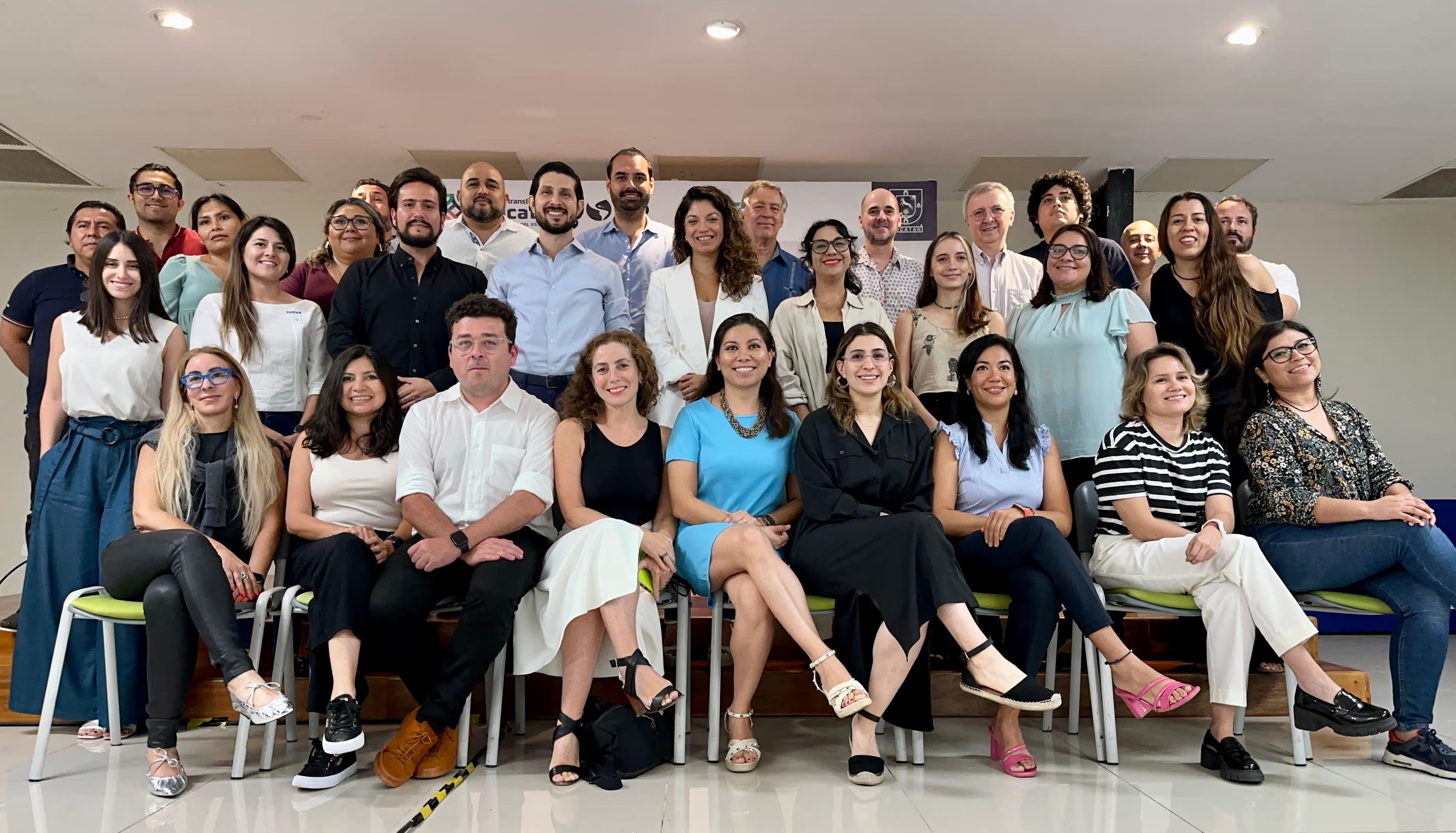
The intervention involved forming and supporting intersectoral working groups —composed of representatives from state government, the private sector, academia, and civil society— through active listening processes, structural barrier mapping, and co-design sessions aimed at defining prioritized agendas.
Over two years, the project supported the consolidation of these spaces as permanent working instances, strengthening their capacity to transform consensus into intersectoral roadmaps and prioritized lines of action linked to creative economies and tourism across four states of Mexico’s South-Southeast.
Creative industries break the mold and generate opportunities, but we need to work intersectorally and with multidisciplinary teams.
How do you transform coordination roundtables into sustainable collaboration platforms?
The South-Southeast experience showed that establishing intersectoral spaces is not enough on its own. The challenge was not convening more actors, but designing a methodology that could sustain collaboration over time and translate dialogue into strategic decisions and concrete actions.
Active Listening: Researching before Designing
UNIT visited the three states to meet with creators, independent artists, cultural managers, private organizations, and public officials. Through active listening sessions, a shared map of structural barriers was built: informality, lack of data, weak associativity, absence of commercialization channels, and intersectoral disconnection.
This process served as both diagnosis and trust-building: listening before proposing positioned actors as protagonists of the process.
Co-design: Building Strategies Together
With the barrier map in hand, UNIT facilitated co-design sessions with dedicated teams in each state —mid-to-senior level public servants— combining mapping tools, collective prioritization, and strategic design.
The process included training in public innovation, facilitation, and collective intelligence, ensuring subsequent operational autonomy.
Permanent Working Groups: from Agreement to Roadmap
The intersectoral sessions brought together government, private sector, academia, and civil society to build consensus-based strategies. UNIT provided facilitation and methodological support to transform agreements into intersectoral roadmaps and prioritized lines of action.
The logic shifted from a “roundtable of agreements” to a “roundtable of construction”: actors researched, prioritized, and designed together.
Impact
4
States in Mexico’s South-Southeast region
+200
People involved in the project and intersectoral coordination instances.
+80
Participating institutions and organizations
+75
Intersectoral commitments agreed upon
Activating Creative Ecosystems through Collective Intelligence
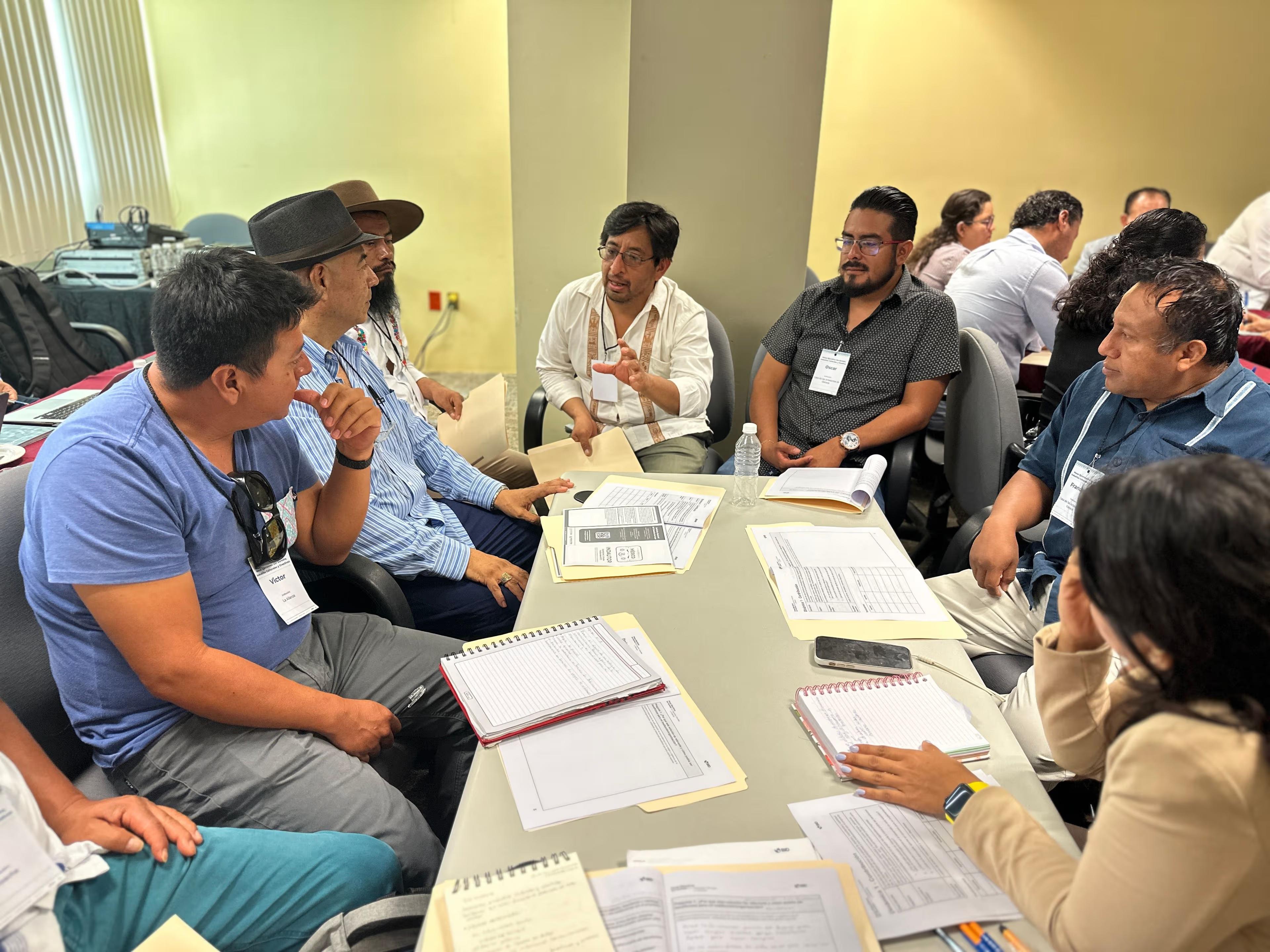
As a result, the Executive Roundtables expanded their operational capacity and consolidated sustained intersectoral working mechanisms, strengthening the translation of shared diagnoses into concrete strategic agendas. Beyond simply installing roundtables, the process supported the formation and maturation of permanent working spaces in Yucatán, Campeche, Oaxaca, and Chiapas, with the capacity to sustain dialogue and translate it into action.
Within this framework, the project produced concrete advances:
- Four Executive Roundtables strengthened as permanent intersectoral coordination spaces, evolving from conversation instances into results-oriented working platforms.
- A collaborative innovation methodology, grounded in territorial research, active listening, structural barrier mapping, and strategic co-design, applied to activating complex productive ecosystems.
- Intersectoral roadmaps collectively built to address bottlenecks identified in each territory and guide prioritized lines of action.
- Two IDB publications that systematize the experience and document learnings and critical factors for activating creative ecosystems from an intersectoral perspective.
By State
Yucatán: Progress in structuring an agenda for a state film commission, linking the audiovisual sector with tourism and economic development to create enabling conditions for the industry.
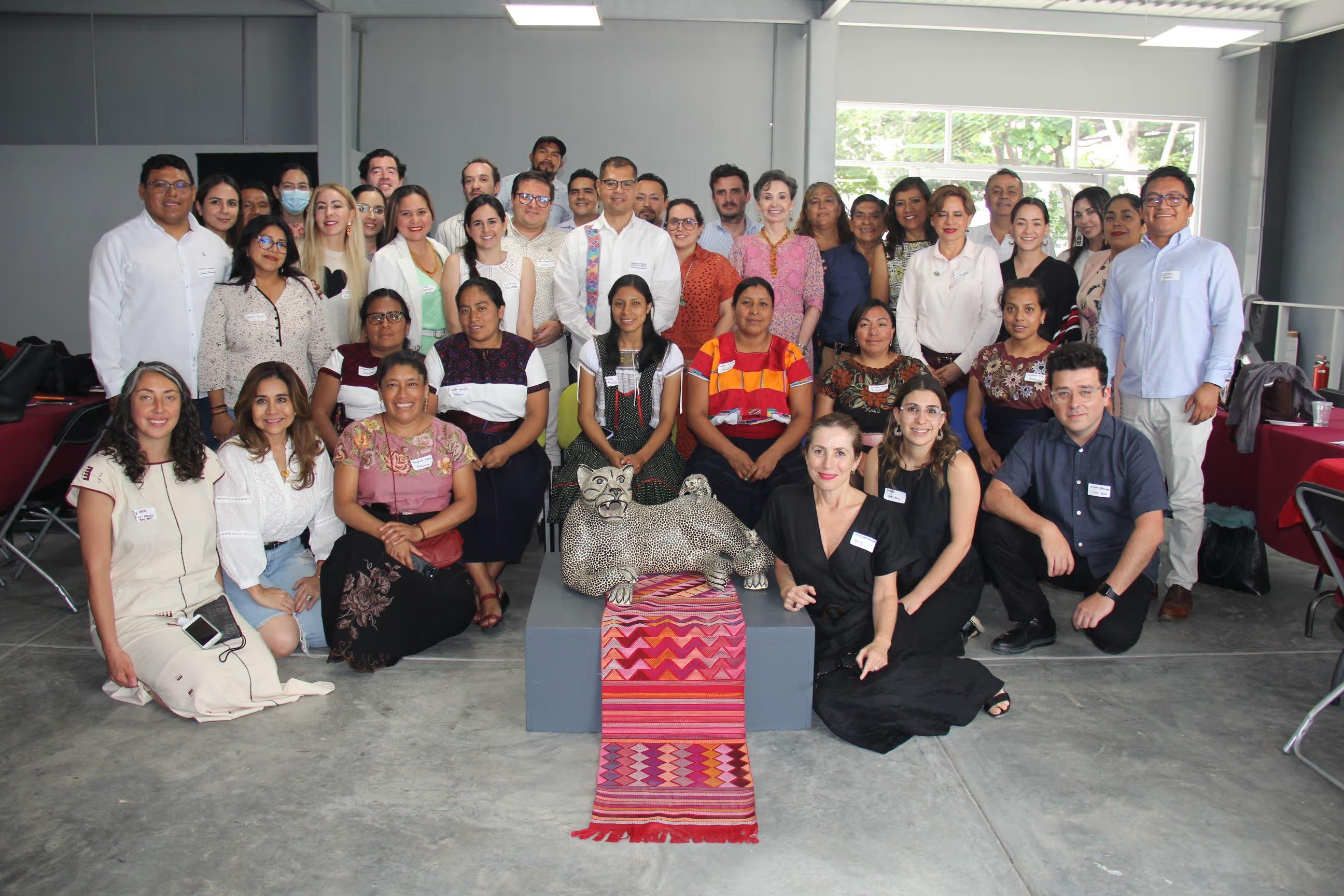
Oaxaca: Consolidation of a management system for artisan producers, aimed at formalizing and making visible the sector’s value chain.
Campeche: Definition of strategic foundations for an integrated creative ecosystem under the “Campeche Creativo” vision, strengthening intersectoral governance.
Chiapas: Work focused on the artisan sector, with an emphasis on professionalization and commercialization.
Together, these advances contributed to the construction of intersectoral public goods, the consolidation of which remained subject to institutional continuity in each state.
The CCI as an Intersectoral Ecosystem
The Cultural and Creative Industries encompass activities as diverse as crafts, audiovisual production, performing arts, design, music, and cultural tourism. Rather than a homogeneous sector, they form a complex productive ecosystem where multiple actors —public, private, and community-based— interact through value chains that cut across culture, economic development, and tourism promotion.
In Mexico’s South-Southeast, this ecosystem combined significant economic and symbolic potential with persistent structural gaps: high levels of informality, scarce availability of sectoral data, low associativity, and weak integration between cultural supply and tourism development strategies. Institutional fragmentation made it difficult for these sectors to operate in an articulated way, limiting their capacity to generate sustained impact.
In this context, intersectoral coordination was not merely an organizational challenge but an enabling condition for activating the productive ecosystem. Designing effective collaboration mechanisms therefore became a key strategy for turning dispersed capacities into shared development agendas.
Each creative sector has its own potential, but they amplify each other much more when they work together.