

Article
Identifying Key Drivers for Advancing Cultural and Creative Industries in Latin America
A perspective on inter-institutional coordination for the development of the CCIs in the region.
Associate Creative Economies Consultant
APRIL 15, 2026
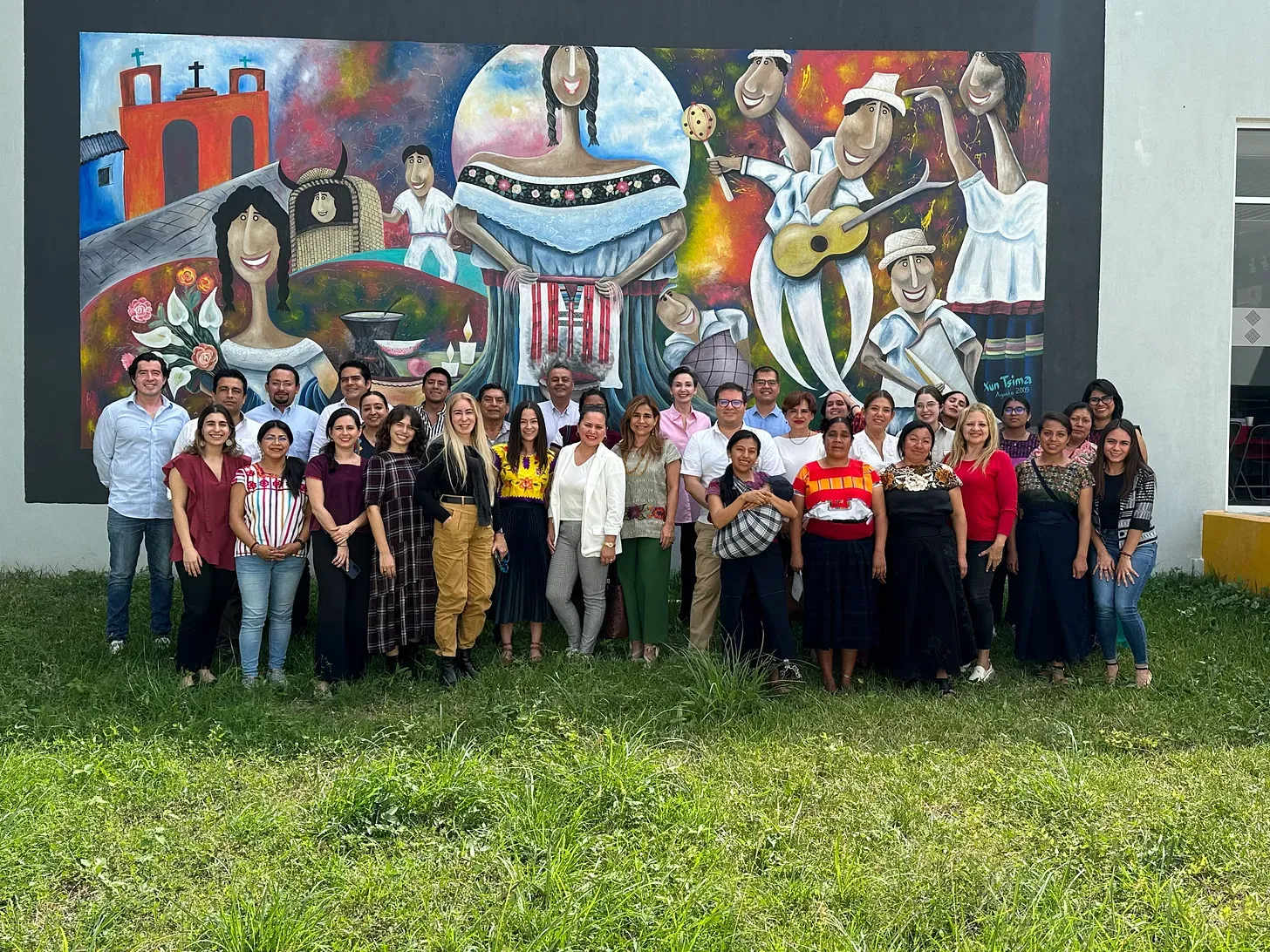
In 2022, together with UNIT, we launched a project with the Inter-American Development Bank (IDB) to strengthen Cultural and Creative Industries (CCIs) in southern and southeastern Mexico. Through inter-institutional executive roundtables, we sought to establish a long-term working methodology that would facilitate cross-sector collaboration and joint efforts between public and private actors, enabling the construction of shared agendas and the removal of bottlenecks limiting the development of CCIs.
The premise underpinning this work is one I have defended in various professional roles and spaces: disjointed work generates inefficiencies. Too often, multiple institutions and organizations operate in parallel, pursuing similar objectives without effective coordination mechanisms — which dilutes impact and weakens policies.

The project unfolded in two stages. In the first phase, we implemented executive roundtables in Oaxaca, Yucatán, and Chiapas — states prioritized for their potential in CCI development. In the second year, the focus was on maintaining the Oaxaca and Yucatán roundtables while incorporating a new state: Campeche. Despite territorial and institutional differences, both years brought similar challenges and yielded relevant learnings for implementation.
One of these was explicitly noted in the publication corresponding to the 2023 version of the project (see publication here): for initiatives of this type to work, a “political owner” is required — that is, institutional leadership with a genuine interest in incorporating these issues into broader development agendas. This learning guided the work carried out in 2024. Using the same executive roundtable methodology, this year we shifted the focus: rather than simply removing bottlenecks, we sought to advance toward short-, medium-, and long-term action agreements capable of articulating a common narrative and, above all, a concrete roadmap with a development vision for CCIs in each state. Why? Because we found that it was still necessary to construct a politically aware narrative, one capable of engaging with the priorities and languages of the different actors involved.
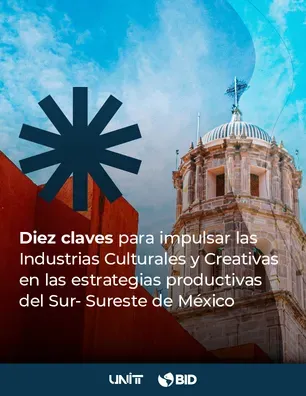
For this reason, in the second publication developed with the IDB, we chose to focus on identifying “keys” for integrating CCIs into productive development strategies in southern and southeastern Mexico. This was a synthesis effort drawing on nearly three years of work, and also an exercise in highlighting — through evidence and experience — the role of CCIs as a driver of economic, social, and tourism development.
What is interesting is that these “keys,” accompanied by concrete examples drawn from the project itself, are not exclusive to the Mexican context. On the contrary, they are transferable to other Latin American countries, where challenges around institutional coordination, capacity development, and the political positioning of the cultural sector are widely shared.
Addressing these learnings from this perspective makes it possible to translate them into concrete public policy conditions, identifying the factors that enable — or block — the effective integration of Cultural and Creative Industries into development strategies. The goal is to move the conversation from symbolic recognition of the sector toward understanding it as a strategic component of development: not as an accessory, but as a set of decisions, capacities, and institutional arrangements that can — or cannot — be activated in territories.
From Learnings to Keys for Advancing the CCIs in Latin America
Below, I present a synthesis of the main keys we identified throughout this process, and I invite you to explore the full publication developed with the IDB available at the following link.
Key 0: Consolidating Methodologies to Define Strategies
Before addressing the keys themselves, there is one that becomes evident upon rereading the report and that cuts across all the others — what we might call a meta-key: the importance of consolidating methodologies, systematizing learnings, and making them replicable.
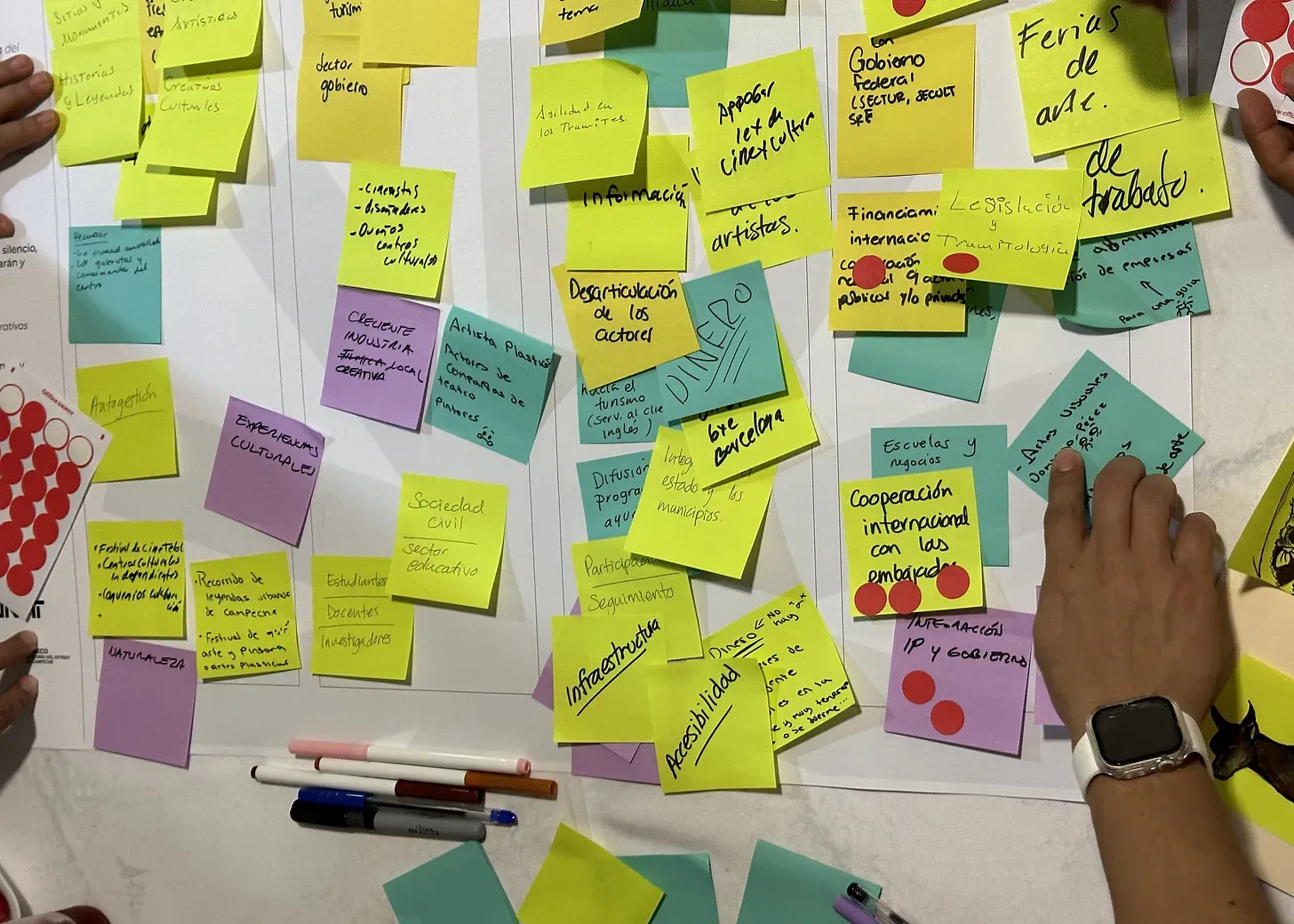
At UNIT, we use co-design methodologies for the installation and operation of Executive Roundtables, starting from a basic conviction: the value lies not only in bringing diverse actors together, but in how that collective work is structured. This methodological emphasis was fundamental in transforming the roundtables into genuine inter-sectoral coordination devices, rather than mere spaces for conversation.
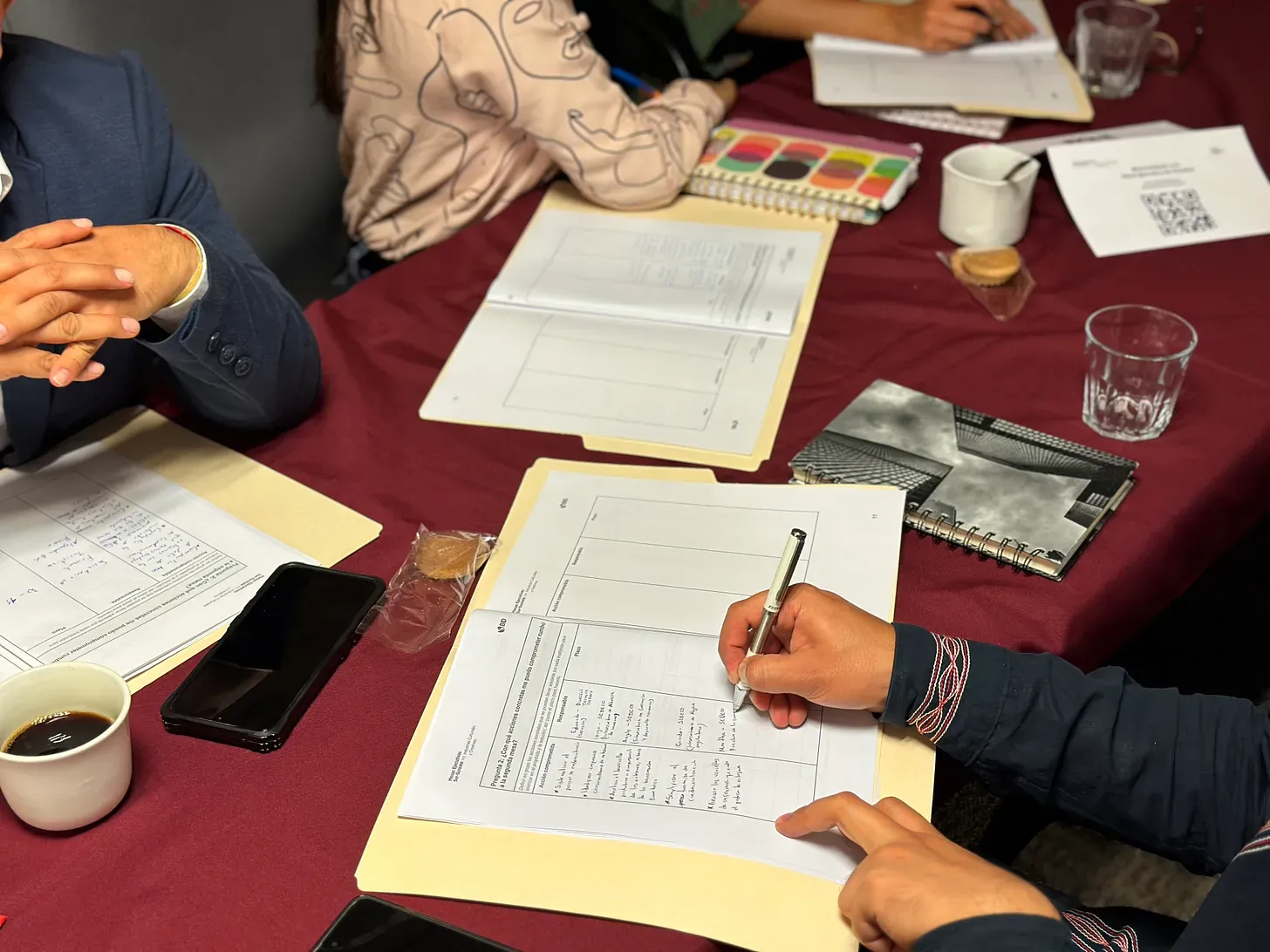
The exercise of systematizing — and, in the case of this publication, translating those learnings into “keys” — is fundamental if we want to scale impact and move toward projects with greater regional reach. Working groups and collaborative spaces exist in many territories; what distinguished this experience was the deliberate effort to establish concrete working mechanisms: workshops with clear objectives, prioritization matrices, minutes of agreements, inter-institutional commitments, and follow-up frameworks.
These formats, apparently simple, proved decisive in improving work efficiency, reducing the dispersion of efforts, and establishing a shared standard. The roundtable, in this sense, is not a mere meeting: it is a methodological device that articulates diagnosis, prioritization, agreements, and follow-up. Without methodology, collaboration dissolves; with it, it becomes strategy.
This initial key raises a fundamental question that cuts across many projects in the region: how do we move from pilot experiences to sustainable long-term policies? Part of the answer lies precisely in the capacity to document, share, and adapt methodologies that work across diverse institutional contexts.
Key 1: Leadership and Political Will
Time and again, the project confirmed that leadership and political will are enabling conditions. For initiatives of this type to work, a “political owner” is needed: an authority or institution with a genuine interest in integrating CCIs into broader development agendas, capable of bringing actors together and sustaining the process over time.
Political leadership does not necessarily mean centralizing decisions, but rather assuming a coordination role, legitimizing the space, and enabling conditions for cross-sector collaboration. In cases where this occurred, the roundtables advanced with greater strategic clarity; where it did not, efforts tended to disperse.
This key is particularly relevant for Latin America, where CCIs often enjoy discursive recognition but lack sustained political grounding. Without real political will, culture is relegated to isolated initiatives; with leadership, it can become a public policy that integrates across ministries and aligns with other agendas.
Key 2: Capacities and Incentives for Collaboration
The development of CCIs does not depend solely on strategic vision or political will. It also requires installed capacities — in both the public and private sectors — and, above all, adequate incentives for collaboration.
The Executive Roundtables revealed that many public teams face specific capacity gaps when working with the cultural and creative sector: understanding value chains, knowledge of cultural business models, use of appropriate support instruments, or capacity to coordinate cross-sectoral agendas. On the private side, gaps also emerged around professionalization, tax knowledge, and understanding of how the State operates, including its timelines and logic.
There is also another element: collaboration does not happen through goodwill alone, but when there are clear and aligned incentives. If participation in these spaces does not translate into concrete benefits — better instruments, greater coordination, tax incentives, fulfillment of management indicators, legislative agendas, among others — commitment tends to dissolve.
Therefore, strengthening capacities and introducing explicit incentives for collaboration is a central condition for the success of cross-sector development agendas. It is not enough to convene: it is necessary to design conditions that make joint work valuable and sustainable.
Key 3: Integrating CCIs into Strategic Agendas Through Public-Private Partnerships
CCIs reach their greatest potential when they are no longer thought of as an isolated sector and are instead integrated into strategic agendas for productive development, tourism, innovation, or urban development. At that intersection, culture moves beyond the purely symbolic realm and begins to generate economic value, employment, and territorial positioning.
In southern and southeastern Mexico, this integration made it possible to link sectors such as tourism, audiovisual, crafts, new technologies, gastronomy, and territorial development — expanding the impact and political relevance of the CCIs. Public-private partnerships emerged as a fundamental mechanism for this integration, connecting capacities and resources: where some saw a need, others identified an investment opportunity. Thus, in Yucatán, the first initiatives toward building a location catalogue were led and financed by local production companies.
The audiovisual sector illustrates this virtuous cycle well. Developing film production in a city does not only impact the audiovisual sector — it activates a broader network of services and productive chains: tourism (by putting territories on the map), the hotel industry, gastronomy, equipment services, new technologies, and local suppliers who must be hired for a production. In this context, public-private coordination not only facilitates the integration of CCIs into strategic agendas, but expands their financing opportunities and their insertion into other productive dynamics.
This integration and the strengthening of partnerships not only benefit the creative sector, but also contribute to diversifying local economies, generating employment, and positioning cities around their identity and cultural value.
Key 4: Formalization, Working Conditions, and Professionalization
The project also brought to light structural challenges that cut across the creative sector in the region: high levels of informality, labor precarity, and low levels of professionalization.
While CCIs are recognized for their capacity to generate economic and social value, this value does not always translate into dignified and sustainable working conditions for those employed in the sector. Addressing these gaps is essential if CCIs are to be established as a long-term development driver.
The Executive Roundtables helped make visible the need to advance instruments that promote formalization, access to financing, training, and professionalization. Without these conditions, the sector’s growth rests on fragile, difficult-to-scale foundations.
This key invites us to view CCI development not only through the lens of economic growth, but also through the quality of employment and the labor sustainability of creative projects.
Key 5: Continuing to Generate Evidence for Decision-Making
Finally, a cross-cutting key is the need to continue producing information, data, and evidence that makes the impact of CCIs visible and strengthens their positioning in development agendas.
In many contexts, CCIs struggle to gain traction in development agendas due to a lack of clear indicators, comparable data, and systematic evidence. In our experience with the project, having concrete information — on economic impact, employment, productive linkages, or territorial effects — was fundamental for engaging decision-makers, especially when they come from other portfolios such as economics, entrepreneurship, or tourism.
Generating evidence is not merely an academic exercise, but a political and strategic tool. It enables justifying investments, designing better instruments, and sustaining CCIs over time — even in the face of changes in government or shifts in political priorities.
From Keys to Policy Implementation: Next Steps
Through these keys — which may appear simple, but whose implementation is complex — we seek to consolidate learnings and, as stated from the outset, translate them into actionable areas for the implementation of public policies that strengthen culture and creativity as part of countries’ development strategies.
Without entering the discussion about whether art and culture are valuable in themselves — something of which I have no doubt — the challenge we face today is to move strategically in the design and implementation of long-term public policies for a sector that, despite its high potential, still faces structural disadvantages. I also have no doubts — and the evidence confirms this — that culture and creativity are essential for the development of countries, the generation of employment, and the construction of more sustainable economies. The point, then, is not to keep affirming their importance, but to create the conditions for that importance to translate into effective policies, capable of being sustained over time and integrated consistently into the development agendas of Latin America.