

Article
What Does It Mean to Be a Creative Bureaucrat?
Designing in Paradox: When Bureaucracy Becomes a Space for Imagination
Founding Partner. Creative and Strategy Director
APRIL 15, 2026
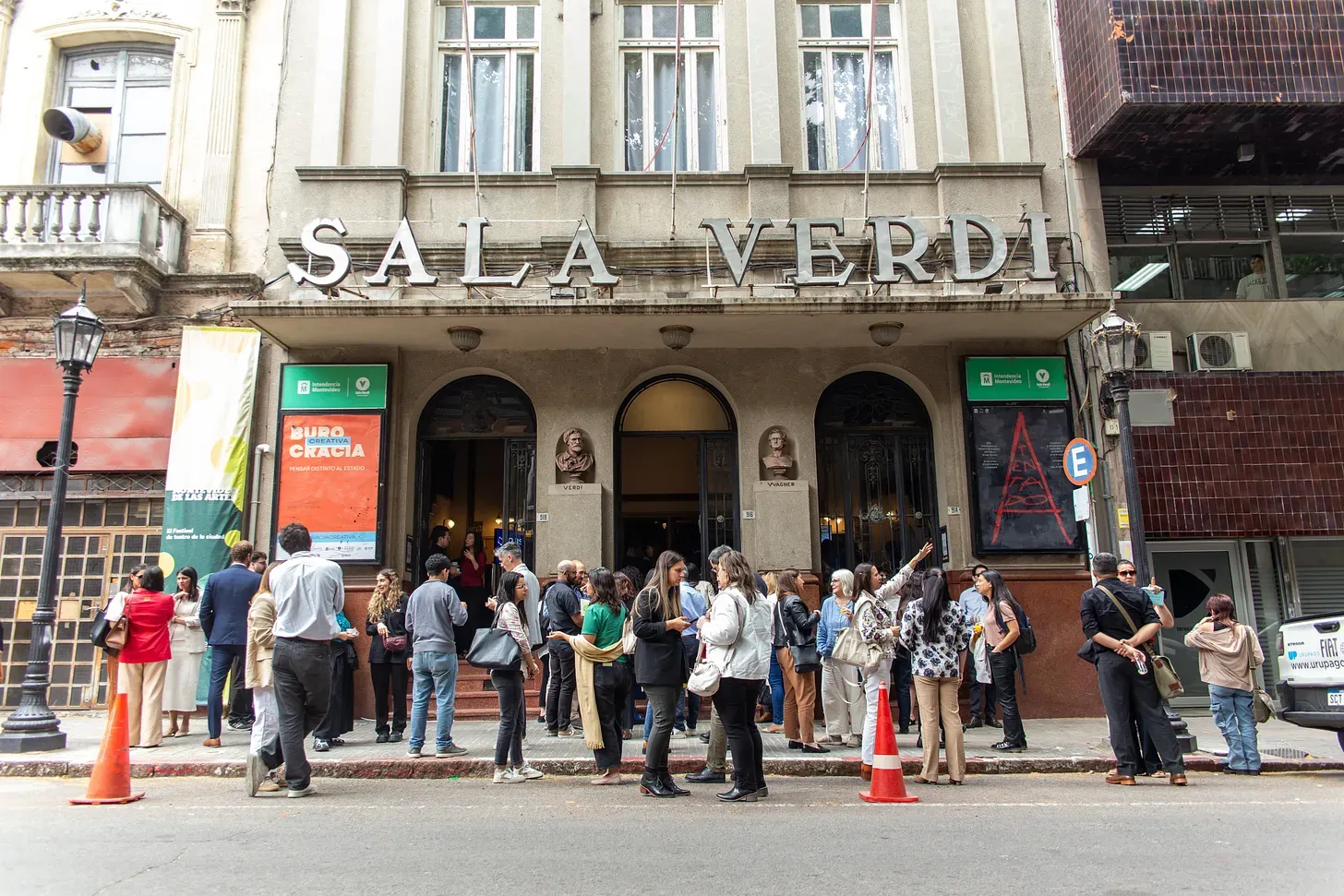
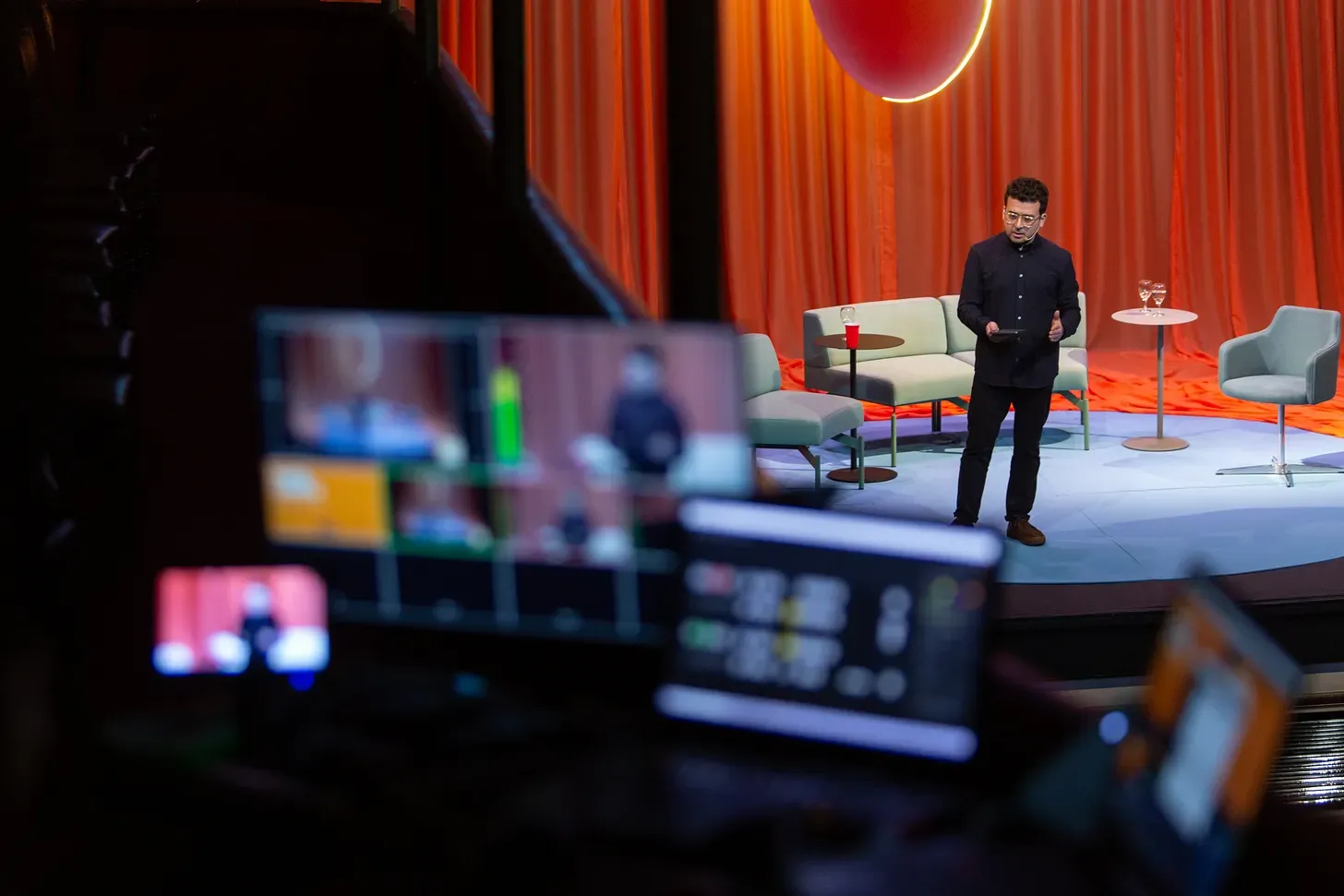
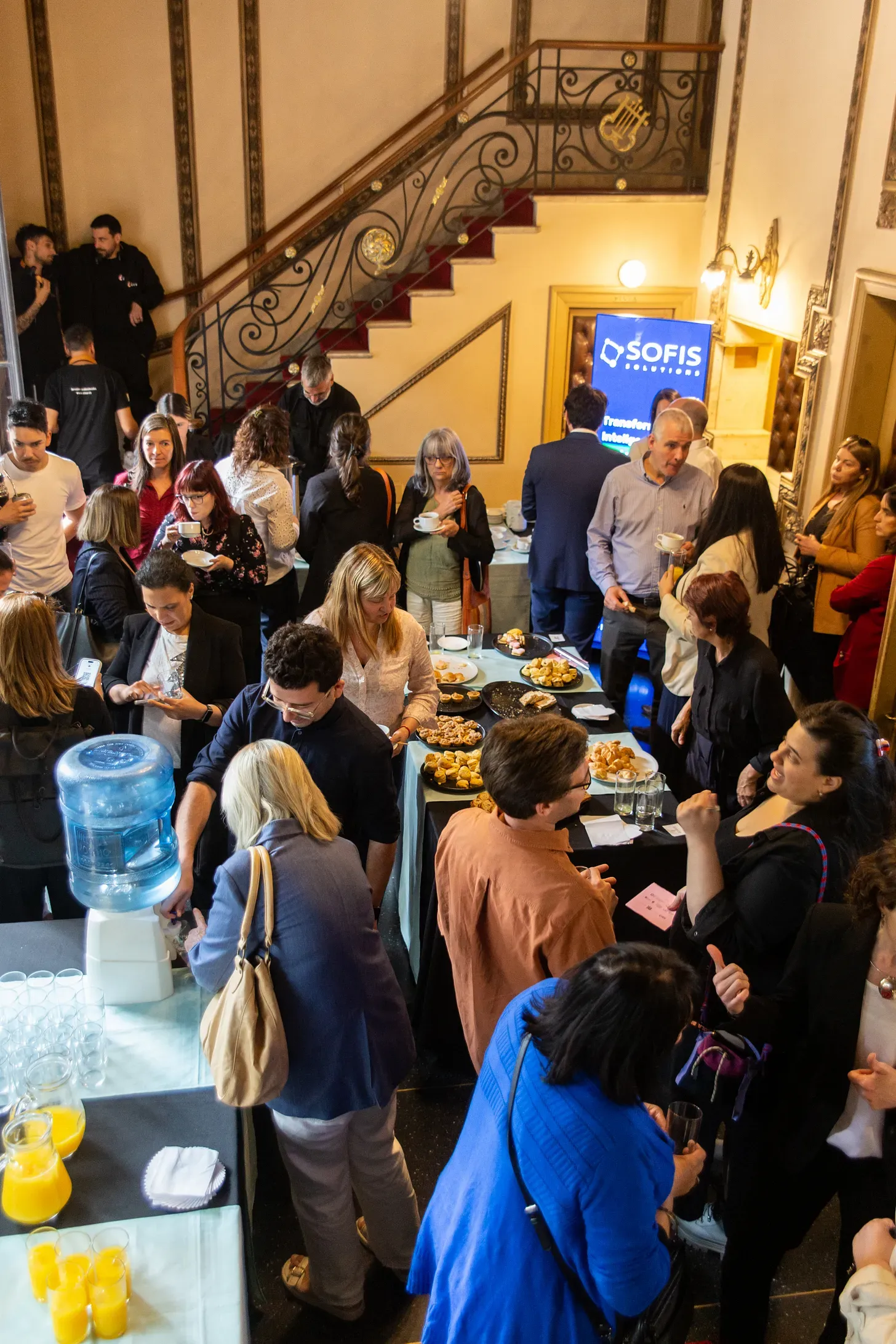
In November 2025, in Montevideo, a special event on Creative Bureaucracy in the region took place. Inspired by the Creative Bureaucracy Festival in Berlin, the gathering brought together an unexpected audience: public servants in dialogue with visual artists, designers, and creatives from various fields. This unusual convergence served as the audience for a talk that sought to establish a conceptual framework for opening this discussion in the Latin American context.
The Misunderstanding of Bureaucracy
Let's start with an uncomfortable question: what image comes to mind when you hear the word "bureaucrat"? It's probably not a flattering one. We think of Kafkaesque labyrinths, windows that never open, forms designed to confuse, officials who repeat "it can't be done" like a mantra. Bureaucracy has become synonymous with rigidity, with obstruction, with everything that prevents things from happening.
But this misunderstanding runs deep and comes at a cost. Because bureaucracy is not the enemy of creativity or of vibrant public life. Bureaucracy is, literally, the infrastructure that makes the common possible. Every time we want something to last beyond individual impulse, every time we need to coordinate actions among strangers, every time we try to uphold a collective commitment, we are building bureaucracy.
Bureaucracy as a set of processes and rules; bureaucracy as a set of people and teams.
The artist who organizes a residency, the activist who sets up a cooperative, the neighbor who manages a community garden: they are all doing bureaucracy. The difference between a bureaucracy that enables and one that suffocates lies not in its existence, but in its design.
So when we talk about creative bureaucracy, we are not proposing to decorate old processes with cheerful colors. We are talking about something far more radical: imagining and building institutions that do not yet exist — institutions capable of inhabiting the complexity of our time.
Creating in the Territory of Paradox
Creative bureaucracy operates in uncomfortable territory, full of tensions that are never fully resolved — only inhabited in increasingly sophisticated ways.
The first of these tensions is the most obvious: institutions need permanence to function, but the reality they seek to govern is in constant flux. As Charles Landry puts it, a good bureaucracy is slow enough to be careful, but fast enough to matter — it must move at the speed of need, not only at the speed of its own processes.
Let's think about this concretely. A public hospital needs stable protocols: how to handle an emergency, how to administer medication, how to register a patient. Without that stability, the system collapses into chaos. But at the same time, that hospital operates in a world where new diseases emerge, medical technologies change constantly, and the needs of the population shift. If the protocols are too rigid, they become obsolete — even dangerous.
The creative bureaucrat inhabits precisely that gap. They build structures solid enough to last, flexible enough to evolve. Like an architect who designs a building knowing it will be used in ways they cannot fully anticipate. The walls define spaces, but they do not determine every possible use.
This tension becomes even sharper when we recognize the nature of the problems that public institutions face today. In the 1960s, Horst Rittel coined a term that has become central to understanding our present: wicked problems — perverse, twisted, wild, and untamable problems. These problems have baffling characteristics. They have no definitive formulation: every attempt to define them reveals new dimensions. They have no clear solution criteria: we cannot say with certainty when they have been definitively resolved. And every intervention changes the problem itself, leaving traces that cannot be erased.
Climate change is perhaps the paradigmatic example, but by no means the only one. Urban inequality, mass migration, the care crisis in aging societies: all of these are wicked problems, resistant to any clear determination of their dimensions, implications, and solution criteria. The crucial point, however, is to recognize them and confront them on their own terms: these problems do not wait for us to have all the answers. They are happening now, they demand action now — but any action based on the illusion of total certainty is destined to fail in unpredictable ways.
Here a second productive tension emerges: between expert knowledge and lived experience. Rittel identified something he called "symmetry of ignorance." In complex problems, no one knows everything. The energy technician knows about electrical grids, but not how a low-income family decides between paying the electricity bill and buying food. The economist knows about macroeconomic models, but not what it feels like to work three precarious jobs to sustain a household. The urban planner knows about densities and traffic flows, but not what it means for a single mother to cross the city on three buses to take her child to school.
Creative bureaucracy does not consist of giving more power to experts, nor of romanticizing "popular knowledge." It consists of orchestrating situated knowledges — creating spaces and processes where they can inform one another without either dominating or canceling out the other. This is not an exercise in goodwill but an epistemic necessity: in contexts of radical complexity, technical expertise without lived experience is blind, and lived experience without technical expertise is powerless.
The third tension is perhaps the subtlest, but also the most political: the tension between following rules and making rules. Every artist is intimately familiar with this tension. A sonnet has fourteen lines and a specific rhyme scheme, but within that rigid form, infinite variations are possible. Constraints do not kill creativity — they generate it. The question is: who makes the rules, and for what purpose?
The creative bureaucrat does not destroy institutional form, nor pretends that everything is infinitely malleable. Instead, they reimagine the rules from within, constantly asking: what worlds does this form, this protocol, this process make possible? A concrete example: a registration form for a social program can be designed to filter and exclude, or it can be designed to welcome and include. The difference lies not in having or not having rules, but in what principles organize those rules.
This question about underlying principles is what turns bureaucratic work into political work. Because every institutional design choice is a choice about what kind of political subjects we are building, what kinds of social relations we are making possible — or impossible.
Practices and Challenges
At UNIT, we believe that incorporating experiences like this one is key to understanding the nature of the challenges we face. That means embracing the creative tensions that shape our practice — between the stable and the mutable, between expertise and experience — in order to find strategies that generate value through the transformation of what is given.
In future publications, we will continue sharing promising practices for developing shared languages, replicable practices, and learning infrastructures that make it possible to experiment, adjust, and decide in contexts of uncertainty — and to innovate in the design of institutions capable of lasting without becoming fossilized, and of transforming without losing what makes them common.