
Creative Policy Programme
APRIL 25, 2025
AUTOR
FECHA
IDIOMA
EDITOR
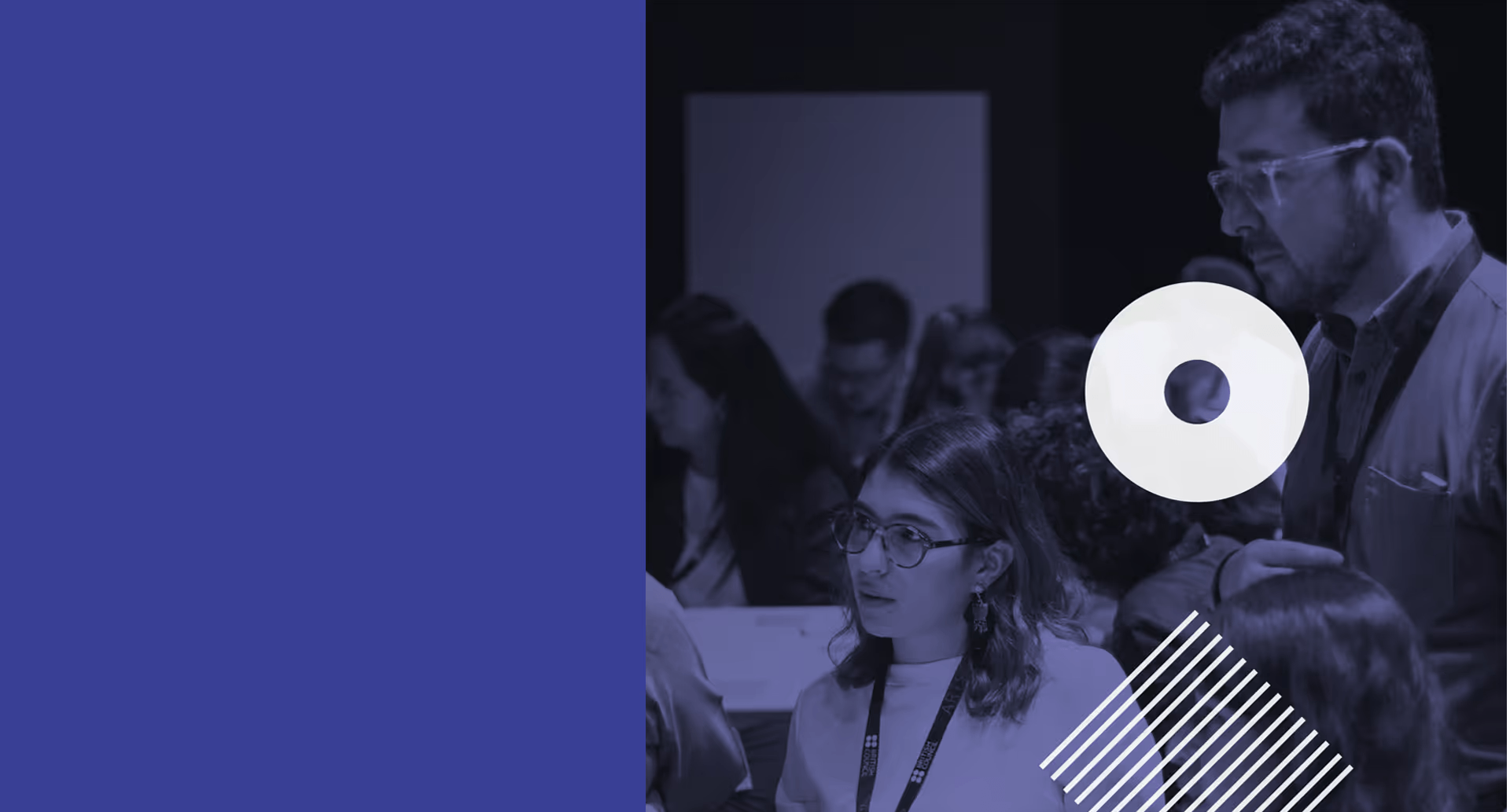
In collaboration with the British Council Mexico and the Royal College of Art, Unit created a toolkit to design public policies in the creative economy, focusing on user-centered approaches and innovation in the public sector. The Creative Policy Programme is a British Council initiative aimed at equipping public officials and cultural managers with user-centered design tools to create better programs, policies, and experiences in Mexico’s public and cultural sectors.
Focused on fostering public innovation, this program not only seeks to improve understanding of the creative economy and its methods but goes further—training and developing participants’ skills so they can design their own services, programs, and/or policies.
The first edition of the Creative Policy Programme was designed by a team led by Nicolás Rebolledo, partner at Unit, within the context of his work at the Royal College of Art and in collaboration with the British Council Mexico team. It was carried out in July 2019 with members of the Subsecretariat for Cultural Development of Mexico’s Ministry of Culture.
The goal was to help each participant identify which proposals are necessary and appealing to the public they serve, based on their own context.
Designed as an intensive program, the Creative Policy Programme combines theory and practice through a series of masterclasses, workshops, and discussions. Its main objectives are threefold: to analyze the public case for the creative economy; to promote design and innovation skills among public administration officials; and to connect and mobilize peers within the sector.
To carry out this practical experience, the program was structured into six modules, which gave rise to the development of this toolkit—each with key processes and outputs:
1. Choosing a public challenge:
The first step involves identifying and selecting a challenge worth addressing during the program. It must be relevant to the public institution’s mandate and/or the daily activities of the participants.
2. Introduction:
Based on the previously defined challenge, participants are introduced to basic design capabilities for public sector innovation. Through talks and preparatory readings, key theoretical frameworks are presented, along with a range of international case studies that illustrate the role of the creative economy and how design can support innovation in this field.
3. Exploring the problem:
Following the theoretical introduction, participants dive into the practical dimensions of creative policy design. At this stage, the aim is to reframe the public challenge with a human-centered perspective, identifying a key objective.
4. Designing a proposal:
With the problem outlined, teams begin creating and developing an intervention. This may take the form of a new policy, program, or service, considering key users and stakeholders. Prototypes are developed and shared with other participants for feedback.
5. Presentations:
Each group prepares a presentation of their process, sharing ideas, insights, and reflections. A proposed action plan is also outlined to apply their learnings in their day-to-day work.
6. Evaluation:
The expert team conducts interviews and a brief survey with participants to assess the program’s impact.
Through this model, participants not only gain new knowledge but also develop a mindset of innovation and creative skills that can be applied in the everyday practice of the public sector.
“What’s interesting is that after this experience, the same methodology -which combines service design for public sector innovation with a focus on creative economies- has been used to develop other programs at Unit, which we’ve implemented in similar settings. This has allowed us to test the model in various contexts, such as in the state of Puebla in 2020 and in Kuwait in 2021,”
Rebolledo also adds that this program synthesizes Unit’s current work in public sector innovation, with a focus on creative economies. “Today, our agenda has expanded to Mexico, and we’re working with the IDB (Inter-American Development Bank) to develop a creative economy strategy for post-pandemic economic recovery in four Mexican states.”