
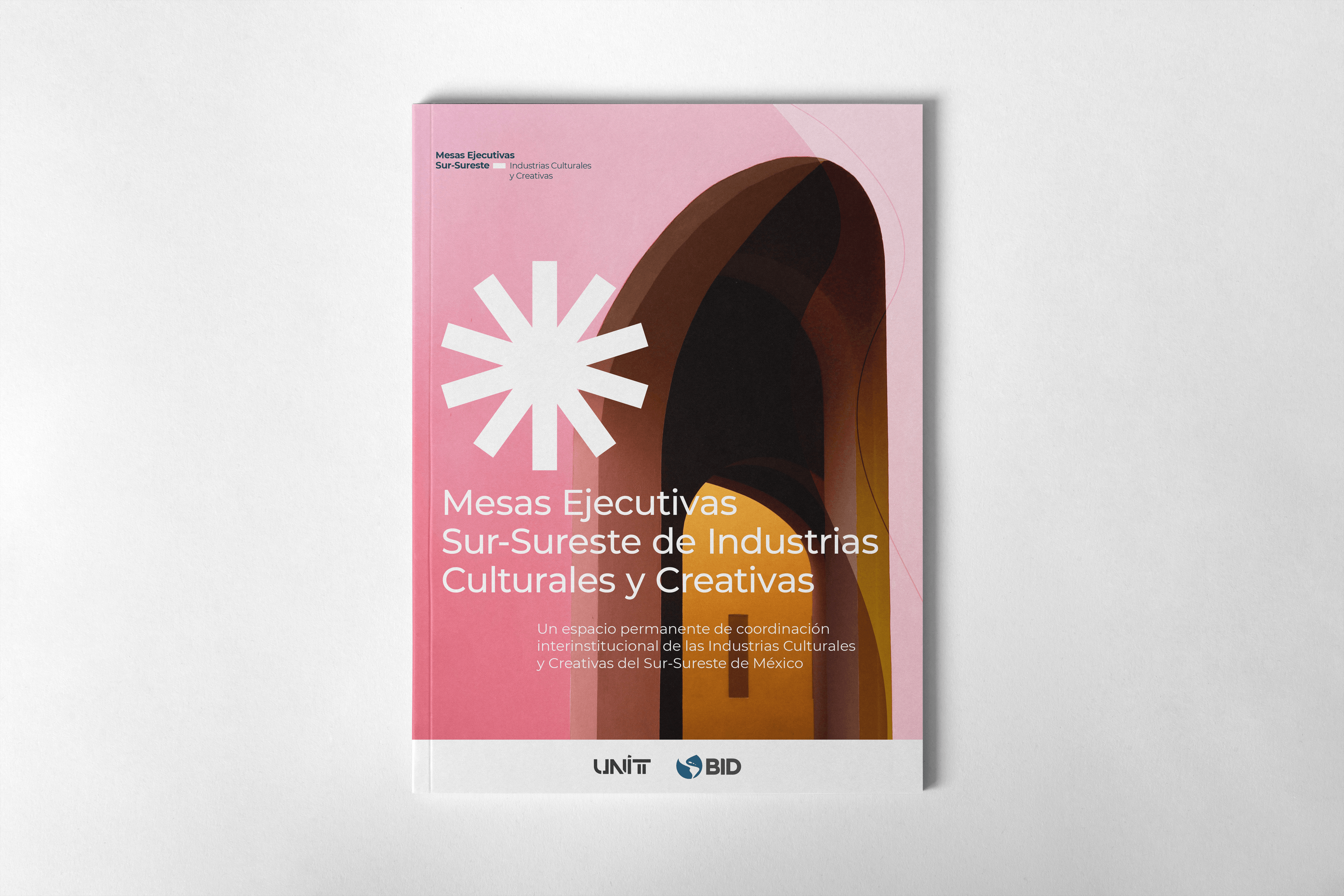
Southern-Southeastern Mexico Cultural and Creative Industries Executive Roundtables
APRIL 22, 2026
AUTOR
FECHA
IDIOMA
Context
The cultural and creative industries (CCI) of Southern-Southeastern Mexico are a strategic asset for the region's economic and social development, but have historically operated at the margins of formal productive policies. The states of Yucatán, Oaxaca, and Chiapas concentrate diverse creative ecosystems — from audiovisual production to traditional crafts — that require effective intersectoral coordination mechanisms to reach their potential. The Inter-American Development Bank (IDB) commissioned UNIT to design and implement a public-private articulation model inspired by Peru's executive roundtable experience, adapted to the context of Mexico's CCI.
Challenge
The creative ecosystems of the South-Southeast faced significant institutional fragmentation: cultural, economic, and tourism policies operated without effective coordination, creating duplication of efforts and gaps in attention. Sector actors — artisans, audiovisual producers, creative entrepreneurs — lacked formal spaces to engage with public institutions and channel their demands. Sector bottlenecks were dispersed across multiple jurisdictions and levels of government, with no systemic mechanism to identify, prioritise, and resolve them through coordinated public-private action.
Approach & Methodology
UNIT designed and implemented the project through a three-phase methodology grounded in Mark Moore's public value theory. Phase 1 — Strategy Design and Validation — included field visits to the three states, mapping of 180 existing initiatives, 15 preliminary interviews, more than 16 institutional meetings, and 4 active listening sessions. Phase 2 — Preparation and Training — developed a four-module virtual training programme for institutional teams, complemented by 10 preparatory meetings and 6 pre-roundtable working sessions. Phase 3 — Implementation and Monitoring — consisted of installing and operating the roundtables themselves.
Key Findings & Results
The project achieved the establishment of 3 executive roundtables — one per state — with 6 formal sessions over 12 months of implementation. The process involved more than 200 people and 80 institutions, identifying 52 sectoral bottlenecks of which 15 were prioritised for immediate resolution. The roundtables generated 75 intersectoral commitments, of which 59 were implemented during the project period, along with 28 new collaboration opportunities and 3 sectoral strategic plans. The focused sectors were audiovisual in Yucatán and crafts in Oaxaca and Chiapas.
Significance & Implications
This project demonstrates the viability of adapting the executive roundtable model — originally designed for traditional productive sectors — to the realm of cultural and creative industries in subnational contexts. The methodology and results offer a replicable model for other Latin American countries seeking to strengthen intersectoral coordination around their creative economies.
Key Takeaways
- Executive roundtables are an effective public-private coordination mechanism for resolving bottlenecks in cultural and creative industries at the subnational scale.
- Public value theory provides a solid framework for designing articulation spaces that generate political authorisation, public value, and operational capacity.
- A preparation and institutional team training process is a necessary condition for the success of executive roundtables in contexts where intersectoral coordination is weak.
- The identification of 52 bottlenecks and the implementation of 59 out of 75 commitments demonstrate the model's capacity to produce concrete, measurable results.
- Adapting the model requires attention to the political context, local institutional capacity, and prior characterisation of each territory's creative ecosystem.