
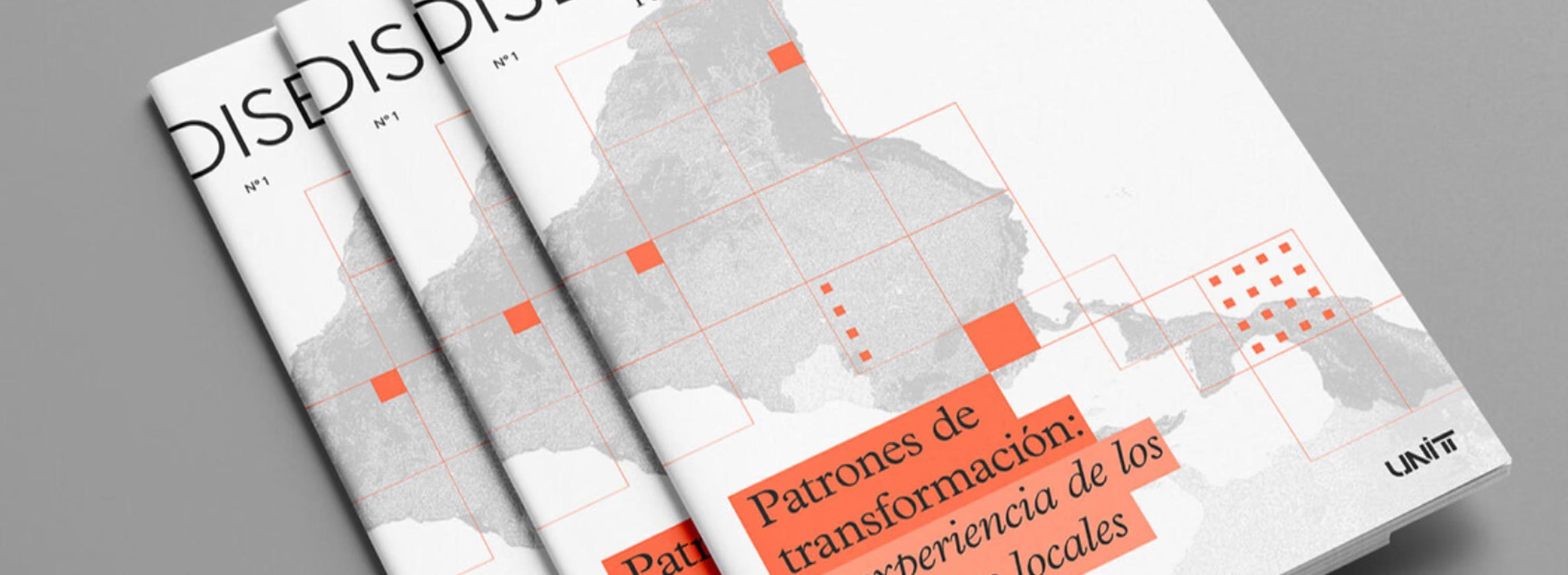
Publication
Vol 1 . Diseño Público: Transformation Patterns
APRIL 22, 2026
Context
Local governments in Latin America and other regions of the Global South have experienced a growing demand for public innovation over the past decade. Faced with complex challenges — from urban management to social inclusion — many municipalities have turned to design approaches to transform the way they design and implement public policies and services. UNIT has worked alongside more than 170 local governments in 17 countries over ten years of practice, accumulating a body of experience that makes it possible to identify recurring patterns in institutional transformation processes at the local scale.
Challenge
Despite the proliferation of public innovation initiatives in local governments, the available literature lacked a practical systematisation of the capabilities and practices that enable these governments to transform from within. Success stories were documented in isolation, without an analytical framework connecting experiences and identifying the common dynamics that facilitate or hinder change. There was a need to build a body of knowledge based on empirical evidence that could guide other local governments in their own transformation processes.
Approach & Methodology
UNIT developed this research through a constructivist, mixed-methods approach, using the public sector dynamic capabilities framework proposed by Kattel (2022) as an analytical lens. The study reviewed UNIT's accumulated experience with 170 local governments — 76% urban and 24% rural — across 17 countries, supplementing this with in-depth case studies. Patterns were organised around three dynamic capability dimensions: learning (generating new knowledge), connecting (articulating actors and networks), and signalling (communicating and mobilising).
Key Findings & Results
The research identified ten transformation patterns in three categories. In the learning dimension: organisational learning systems, peer learning, and new evidence generation methods. In the connecting dimension: visual and narrative communication, network action with territorial actors, strategic transparency in co-design processes, and inspiration through demonstrative experiences. Each pattern is documented with detailed case studies from Colombia, Chile, Honduras, Mexico, and multilateral programmes — including the Bogotá Care Blocks, Hermosillo's Biciclando programme, La Fábrica in Renca, and the Cities and Digital Rights Programme.
Significance & Implications
This publication inaugurates UNIT's Public Design series, establishing a reference framework for understanding how local governments develop transformation capabilities through design. The identified patterns offer a practical tool for public managers, designers, and international cooperation organisations to recognise and strengthen the dynamics that enable institutional change at the local scale.
Key Takeaways
- Ten recurring transformation patterns emerge from analysis of UNIT's experience with 170 local governments in 17 countries.
- The dynamic capabilities of learning, connecting, and signalling form the analytical framework for understanding how local governments transform.
- Peer learning and organisational learning systems are the foundations for sustaining local public innovation processes.
- Network action with territorial actors and visual communication enhance governments' capacity to mobilise communities.
- The identified patterns are transferable across diverse institutional contexts, from rural municipalities to large cities.