
From Cultural Venue to Open Platform: Redesigning Public Value in a Post-Crisis City
Through qualitative research and service design, UNIT worked with Chile's Centro Gabriela Mistral to understand the needs and aspirations of its diverse publics, building a strategic vision that repositions the institution as an open platform of inclusive cultural services for Santiago and its communities.
A Cultural Center Searching for Its New Publics
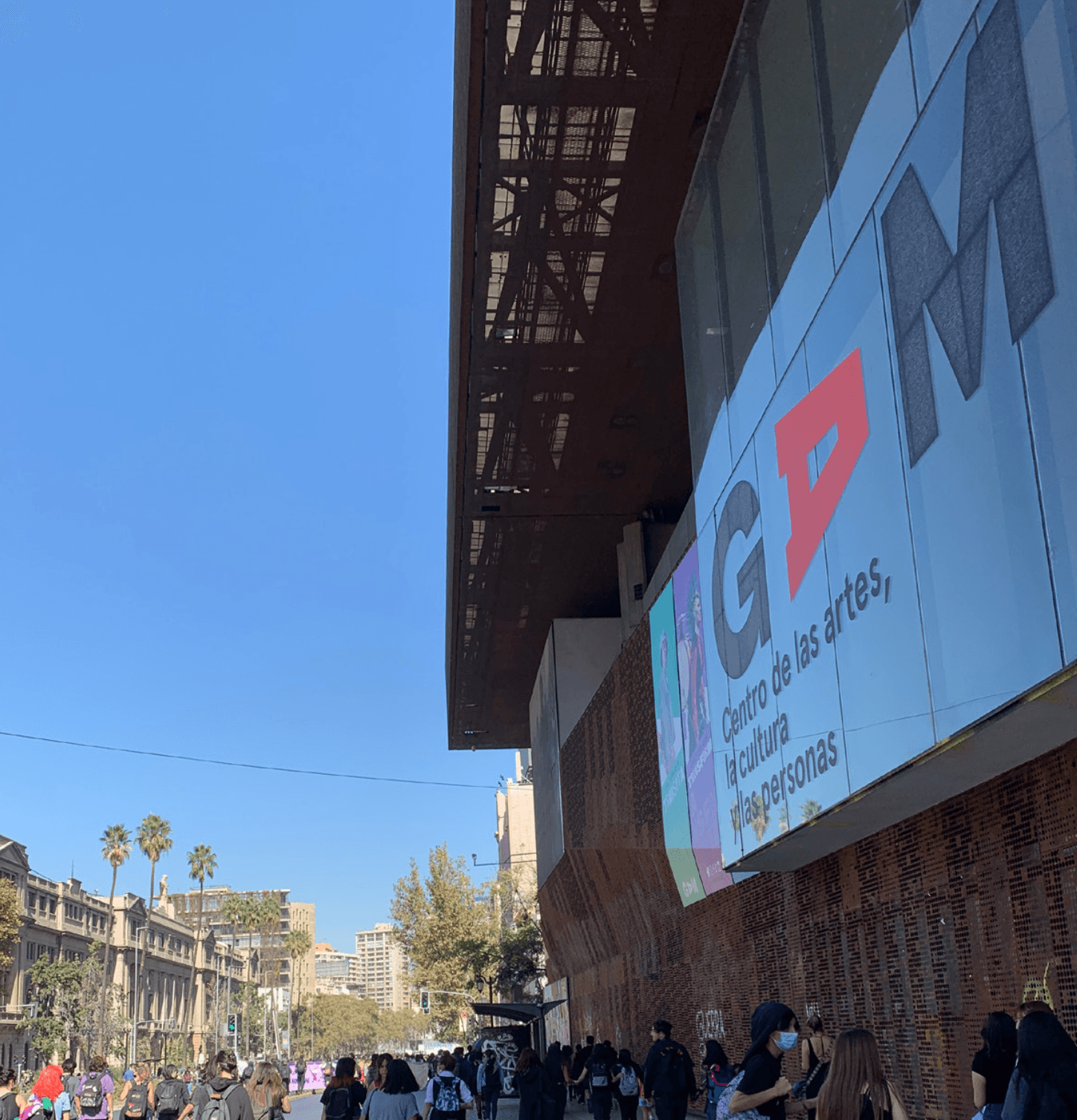
The Centro Gabriela Mistral (GAM) is one of the most important cultural centers in Chile. Located in the heart of Santiago, the complex spans 22,000 square meters across two buildings and houses over a dozen performance halls for theater, dance, circus, classical and popular music, visual arts, and conferences. It also includes five public plazas, a specialized library (BiblioGAM), open shelving, and study rooms. The building itself carries deep historical weight — inaugurated in 1972 under President Salvador Allende for UNCTAD III, later occupied by the military junta, and eventually reborn as a metropolitan cultural center named after Chile's first Nobel laureate.
Yet by early 2022, GAM faced a generative problem. The social uprising of October 2019 and the COVID-19 pandemic that followed had profoundly altered the behavior of cultural audiences across the country. Attendance had dropped. Programming felt less active. Users perceived the center as diminished compared to its pre-crisis vitality. Cultural organizations everywhere were rethinking how they relate to their communities, but for GAM the challenge was particularly acute: field observations revealed entire user profiles — children, neighborhood communities, creative collectives — that the institution was not even considering in its audience characterization surveys.
At the same time, GAM's programming was perceived as oriented toward a specific audience profile: people already connected to culture, with higher purchasing power or pre-existing artistic interests. Strategies to engage people with less access to artistic programming were largely absent. Users reported difficulty finding information about activities, inadequate wayfinding inside the building, and low digital interaction with the center's platforms. The gap between GAM's potential as a public space and its actual relationship with Santiago's diverse populations had become impossible to ignore. The institution needed not incremental adjustments, but a fundamental rethinking of how it understood and served its public.
Listening to the City to Design the Collaboration
UNIT approached this challenge through a public design methodology — a shift from a supply-oriented perspective to one centered on demand and user experience. The intervention was structured in three phases: understand, investigate, and recommend. Rather than starting from institutional assumptions about who uses GAM and why, the team designed a situated research process that placed people at the center.
The first phase involved a thorough analysis of 32 secondary source documents provided by GAM, covering context, audience characterization, service data, and prior consultations. This existing knowledge base was evaluated and synthesized to establish a shared understanding of the institution's starting point and to define the scope of primary research.
From there, UNIT deployed a combination of qualitative methods grounded in active listening. The team conducted 31 semi-structured exploratory interviews — brief five-to-ten-minute conversations with users on five key dimensions: characterization, culture, loyalty, interests, and services. Three observation sessions were carried out directly in GAM's spaces, using a "guerrilla research" technique to analyze how people interacted with the building, its environments, objects, and activities. These field methods were complemented by 11 in-depth interviews lasting 30 to 60 minutes with pre-selected users representing different profiles, exploring their experience and relationship with GAM in greater depth.
The collected intelligence was then synthesized through thematic analysis, producing 11 general findings organized into three categories — about GAM itself, about its publics, and about information and communication — and eight user profiles that made visible the characteristics, needs, and motivations of the center's diverse audiences. Participatory workshops with the GAM team served to validate findings, build collective intelligence, and generate shared ownership of the emerging strategic direction.
Deliverables
User Profiles Report. Research report. Eight detailed user profiles constructed from qualitative research, each with use cases, needs, and relationship patterns with GAM.
Strategic Vision. Strategic framework. A vision positioning GAM as an open cultural services platform for the city, accompanied by six strategic objectives and 19 specific objectives.
International Benchmarking Study. Reference analysis. Analysis of 17 cultural organizations across nine countries, identifying models of inclusive programming and integrated cultural experiences.
Recommendations and Action Roadmap. Strategic guide. Six concrete recommendations with short and medium-term quic
Impact
32
Documents analyzed from GAM's institutional archive
42
Interviews conducted (31 exploratory + 11 in-depth)
3
On-site observation sessions in GAM's cultural spaces
8
User profiles constructed from primary research
6
Strategic objectives defined with 19 specific objectives
17
International cultural organizations benchmarked across 9 countries
6
recommendations delivered with actionable roadmaps
Networks and Collaborations
This project was developed between UNIT and the Centro Gabriela Mistral (GAM), coordinated through GAM's Marketing and Special Projects division. The collaboration brought together UNIT's interdisciplinary team — spanning strategy, service design, innovation consulting, and creative industries — with GAM's institutional knowledge and operational teams.
The international benchmarking component extended the project's institutional ecosystem significantly, drawing on the experience of cultural centers across Latin America, Europe, and beyond, including references such as Matadero Madrid (Spain), SESC Pompeia (Brazil), and Tate Exchange at Tate Modern (United Kingdom), among 17 organizations analyzed across nine countries.
What Changed: From Audience Profiles to Institutional Architecture
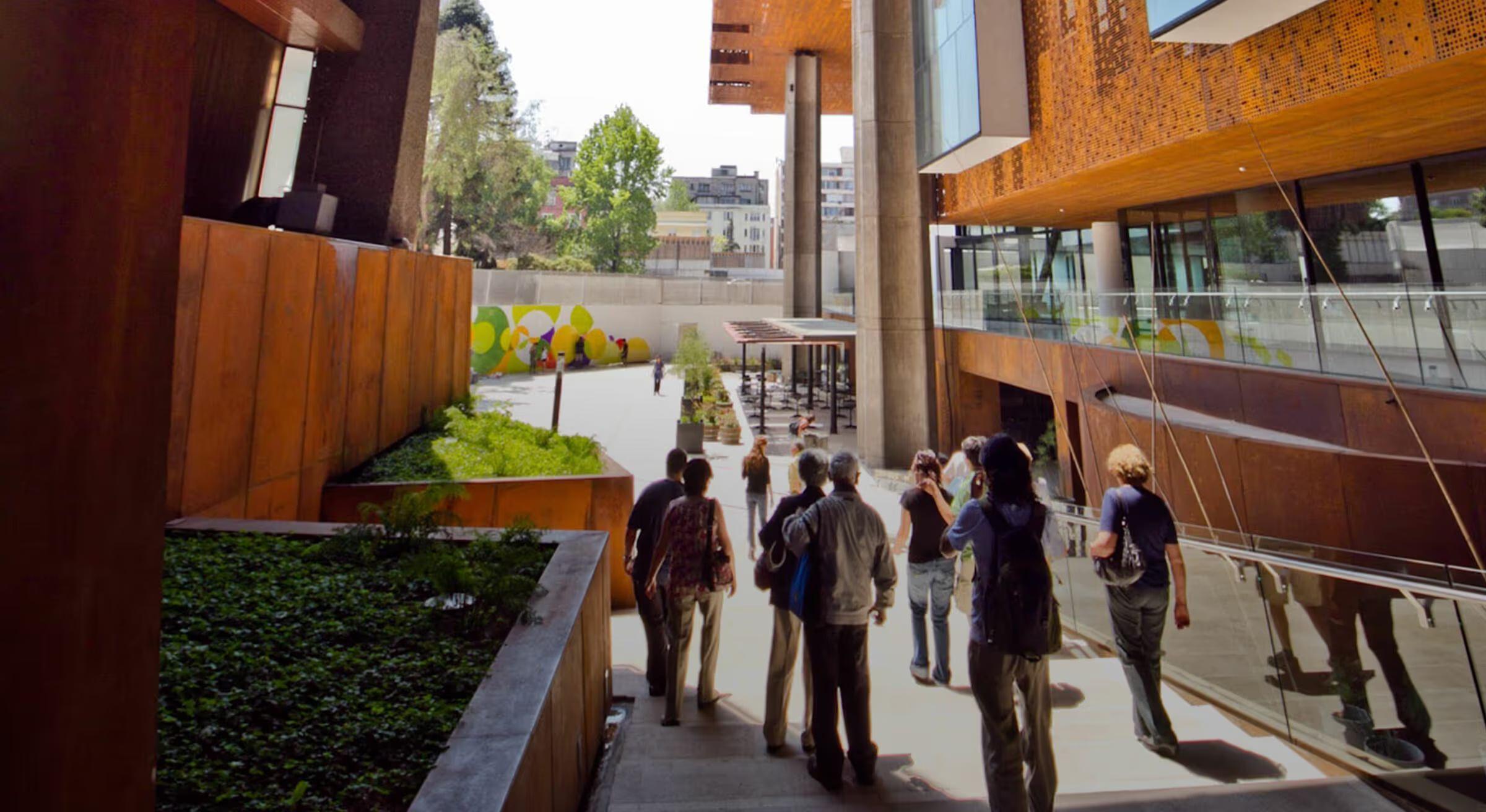
The most significant qualitative transformation was a shift in how GAM understood its own publics. Before the intervention, the institution's view of its audiences was shaped primarily by attendance data and programming-centric categories. The research revealed that people experience GAM through at least four distinct lenses — as a public plaza, as a panoramic viewpoint, as a workspace, and as an art venue — and that these experiences are lived by eight distinct user types, each with different needs, pain points, and aspirations. This reframing moved the institution from a model of cultural consumption to one of cultural habitability.
The strategic vision installed new capabilities within GAM's organizational thinking. The six strategic objectives provided a coherent architecture for decision-making: from captivating new audiences through existing users, to improving complementary services, deepening relationships with community groups, activating inter-institutional collaboration networks, generating an integrated information system based on user experience, and installing a co-design process for ongoing service improvement. The participatory nature of the design process itself — workshops, validation sessions, collaborative analysis — served as a capacity-building experience for GAM's internal teams, introducing methods and approaches of collaborative innovation that could be sustained beyond the consultancy.
The user profiles became a shared language across departments, enabling different areas of the organization to align their work around a common understanding of whom they serve and what those people need.
An Open Cultural Platform as a Model for Latin American Cities
The GAM case carries implications that extend well beyond a single cultural institution in Santiago. Across Latin America, cultural centers and public institutions face a common tension: they were designed for one era of public life and must now adapt to another. The social convulsions and pandemic disruptions that reshaped Chilean society are part of a regional pattern — from Colombia's estallido social to Argentina's economic volatility to the broader renegotiation of the social contract visible across the continent. In this context, the question of how public cultural institutions relate to their publics is not merely operational; it is a question of public value, trust, and legitimacy.
The strategic vision developed for GAM — positioning it as an open platform of cultural services rather than a traditional performing arts venue — offers a replicable conceptual framework for cultural institutions seeking to rebuild their social contract with diverse communities. The approach demonstrates that systems coherence can be achieved not through top-down restructuring but through situated research that reveals the architecture of real user needs and translates them into strategic direction.
The methodology itself constitutes a contribution to public innovation practice in the region. By combining qualitative user research with service design thinking, international benchmarking, and participatory validation, UNIT's approach shows how collaborative innovation can bridge the gap between institutional intent and citizen experience. The eight user profiles — from creative communities seeking spaces for expression to itinerant workers needing a safe place to eat lunch — reveal the kind of granular, human-centered understanding that public institutions rarely develop through conventional survey methods.
The international benchmarking against institutions like Matadero Madrid and SESC Pompeia further positions the work within a global conversation about how cultural infrastructure can serve as orchestration platforms for urban life. The learning cycles proposed in the action roadmap — quick wins followed by MVP testing with users — introduce an iterative, evidence-based approach to institutional transformation that respects the complexity of public sector change while demanding concrete, measurable progress.
For Latin American cities grappling with fragmented public services, eroding trust in institutions, and the urgent need to build public goods that serve increasingly diverse populations, the GAM project offers both a methodology and an aspiration: cultural institutions not as temples of consumption, but as open platforms where the city's many publics find services, recognition, and belonging.